


Flattening Tail Latency by Moving Replication into the Network
Overview
This experiment examines how delivering live blockchain shreds via multicast on DoubleZero affects latency and stability compared to traditional unicast delivery. The goal was to evaluate whether shifting replication into the network could reduce tail latency under real operating conditions.
Ecosystem Context
This experiment used Shredstream, a live blockchain data stream operated by Jito Labs. Shredstream distributes real-time shred data to network participants and represents a high-throughput, latency-sensitive blockchain workload.
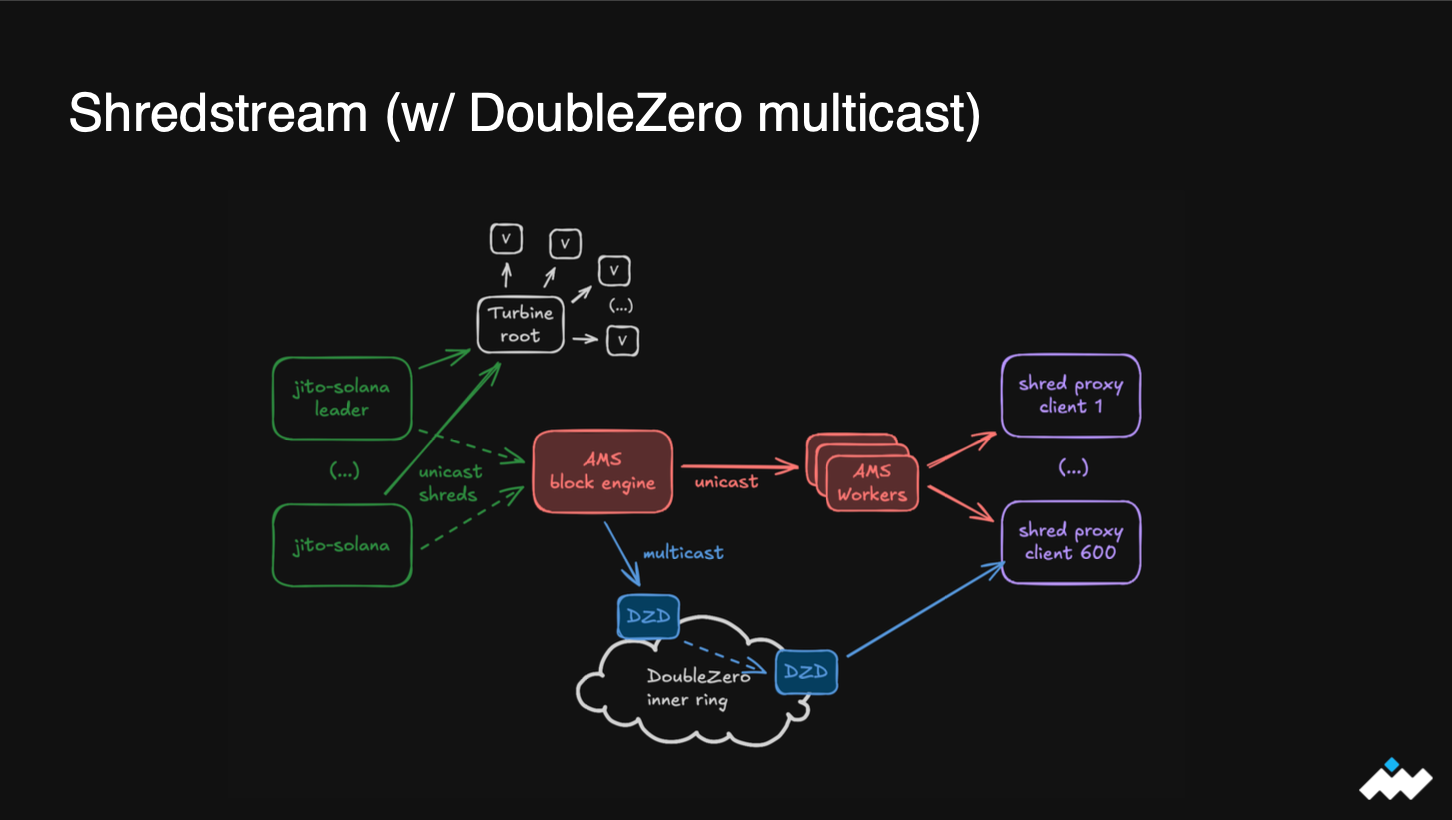
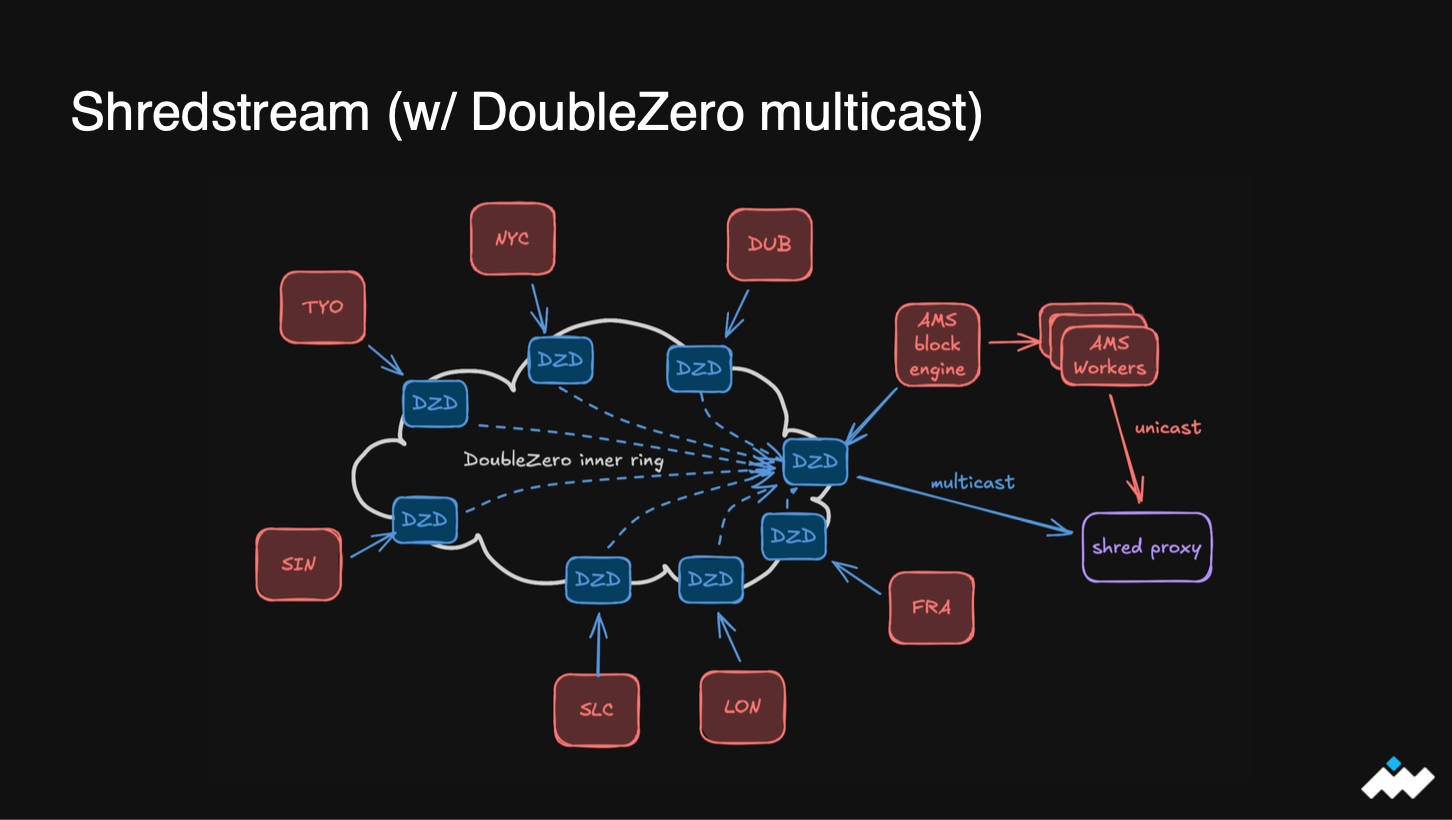
By adapting Shredstream to publish once into a multicast group on DoubleZero, the experiment measured multicast delivery behavior on a live blockchain data stream.
System Context
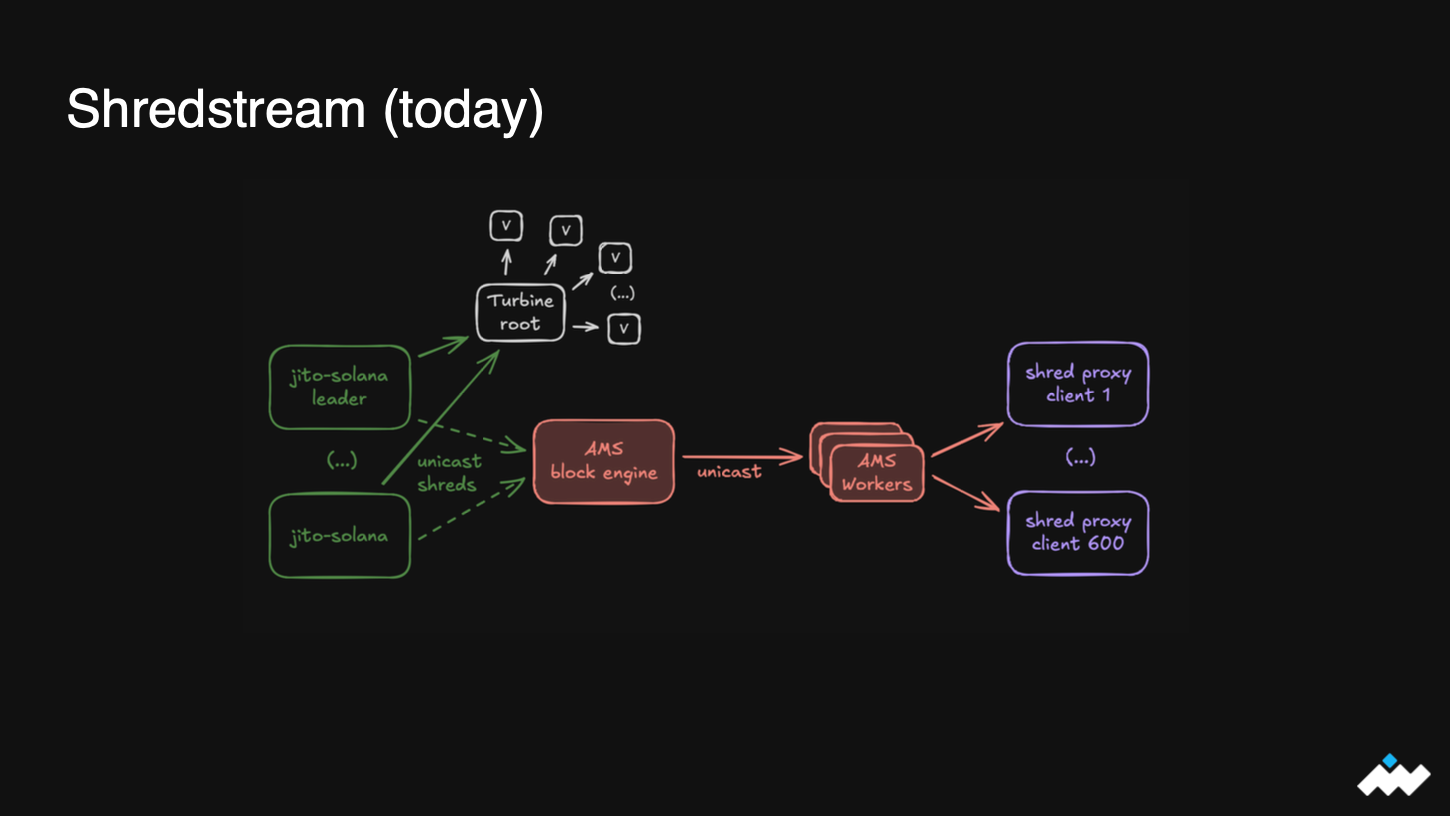
Today, blockchains distribute data using unicast delivery. Each sender transmits a separate copy of the same data to every receiver.
As the number of receivers grows, this approach creates duplicated traffic, higher CPU overhead, and increased variance in delivery times.
These effects are most visible in the tail, where worst-case arrivals determine whether nodes stay in sync. When tail latency is high, validators react more slowly to state changes, even when average latency appears acceptable.
Experiment Design
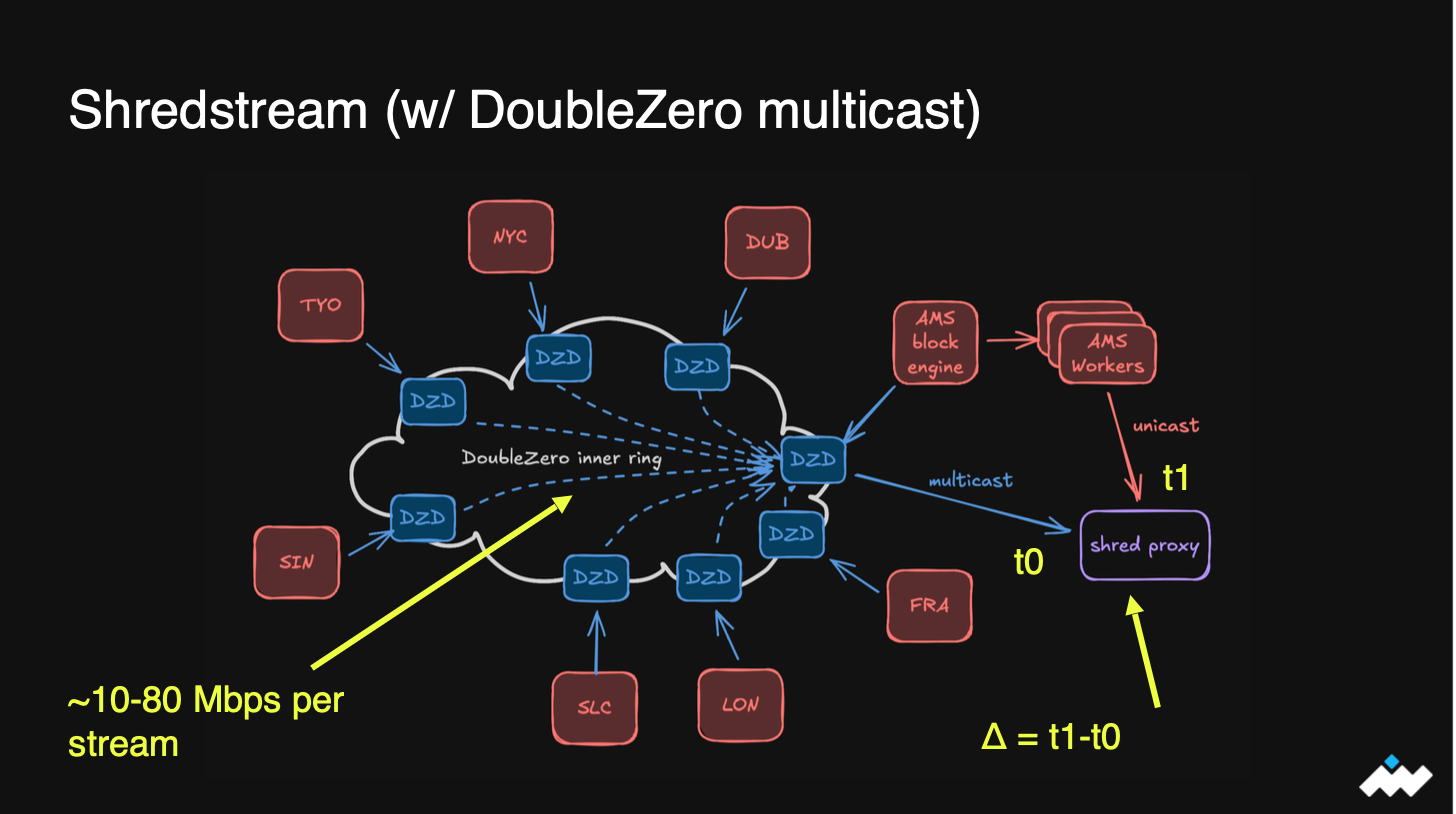
A live blockchain shred stream was adapted to publish once into a multicast group on DoubleZero. Arrival times at receivers were measured and compared against the existing unicast delivery path.
The experiment focused on:
- Median latency
- P99 tail latency
- Delivery stability under load
Observed Results
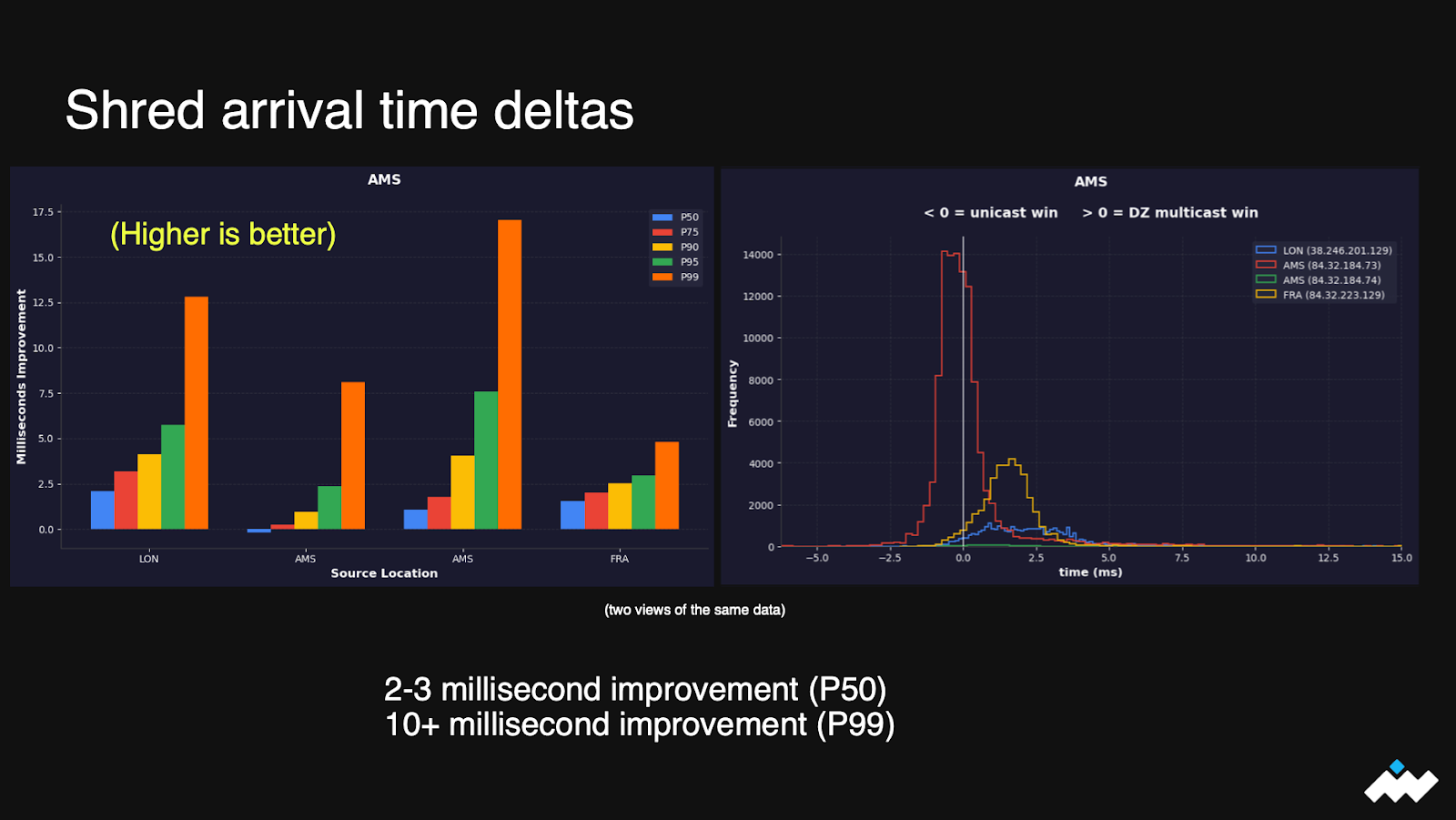
Multicast delivery showed consistent improvements over unicast:
- Approximately 2 to 3 milliseconds faster at the median
- More than 10 milliseconds faster at P99
- Stable performance where unicast fan-out degraded
The most significant gains occurred in the tail of the distribution.
Technical Interpretation
With multicast, the sender transmits a single copy of each packet. The network replicates packets only where paths diverge, reducing redundant work at the sender and across intermediate systems.
By shifting replication from individual machines to the network, multicast removes the amplification effects that cause latency spikes during unicast fan-out.
Business Implications
Lower tail latency and more predictable delivery translate into meaningful operational and economic benefits:
- Improved validator reliability through reduced variance
- Lower infrastructure costs by reducing the need for overprovisioning
- Stronger performance guarantees for protocols and applications
- Better decision-making across validators and infrastructure operators due to more predictable data propagation
- Reduced operational risk during periods of peak network load
While this experiment focuses on validator data propagation, RPC providers benefit indirectly from more consistent block delivery and earlier state availability.
Conclusion
This case study demonstrates that multicast is not simply a faster delivery mechanism. By flattening tail latency, it changes the predictability, reliability, and economics of blockchain data propagation. Moving replication into the network produces measurable improvements with clear downstream impact.
Market Implications
While this experiment focuses on validator data propagation, faster and more predictable shred delivery directly affects how quickly information becomes available to market participants.
Shreds represent the earliest view of state changes on the network. When this information arrives earlier and with less variance, traders can react more quickly and with greater confidence.
Increased participation from traders drives transaction volume, blockspace demand, and fee generation across the ecosystem. In this way, improvements in network-level information flow support the economic activity that underpins internet capital markets.